Those Are Rookie Numbers: Paint More


Painting.
It’s the hurdle that seems almost insurmountable for damn near every miniature wargamer. The effort required to buy and assemble our faceless plastic hordes is trivial compared to the soul-destroying energy it takes to actually put pigment to them.
Once upon a time, I despaired about ever having a fully painted army. It felt impossible; an endless backlog of gray plastic staring back at me.
But over the years, I’ve picked up a few tips and techniques that keep me painting. I don’t have hard data to prove it, but averaging 200+ miniatures a year for the past four years probably puts me in the top quartile for productivity. I’m not winning awards. My work isn’t display-case material. But I’m satisfied with my progress.
More importantly, I haven’t played a game with an unpainted miniature in years. Hopefully some of the tips and tricks I have to share will get your closer to your painting goals.
1) Tally what is productive
I’m going to come out with an unpopular take here: watching YouTube videos won’t improve your painting. There’s an absolute treasure trove of information on the internet, an inconceivably vast ocean of knowledge at our fingertips, but consuming it isn’t the same as being productive.
Painting, actually painting, is at its core a physical skill. More than anything, it requires you to sit down and practice. In the immortal words of Dark Helmet: “Why are you preparing? You’re always preparing. Just go!”
Getting your bristles dirty and pushing pigment will do far more to improve your skills, and your backlog, than any number of videos ever could.
Close the tab, and open your paints.
2) Your tools aren't holding you back
This is something of a corollary to my first point: as the miniature wargaming hobby grows, so does the flood of products designed specifically for wargamers. Paints, brushes, palettes, vortex mixers, cases, lamps, storage solutions; you name it, someone is trying to sell it to you.
It’s true that products have differences. A highly skilled painter can absolutely leverage subtle variations in finish, pigmentation, or flow between paint brands. I’m not at that level, and I doubt you are either.
Don’t trick yourself into inaction by convincing yourself that some new paint, brush, or tool will be a game changer; that you can’t possibly start your project until you acquire that one specific thing. Find workarounds. Mix your paints. Use subpar tools.
Struggling a little will develop your skills. It forces problem-solving. It builds instincts. And those instincts will serve you far longer than any premium product ever could.
If Sam Lenz can win awards with dollar store brushes, maybe the limiting factor isn’t the brush.
3) Upgrade your tools
Haha, I have expertly subverted your expectations.
While it’s true that entire marketing departments are scheming up ways to sell you solutions you don’t need, that doesn’t change the fact that tools and paint brands do differ.
A few years ago, I hit a wall with my painting. No matter what I tried, I couldn’t achieve the results I wanted.
A dear friend, hearing my frustration, dragooned me into spending more than I’d ever been comfortable with on a few sable brushes. They were from a proper art supply store (not some YouTuber-branded “premium” set with a price tag to match) but the difference was night and day.
It turns out that having brushes that hold a sharp tip was exactly what I needed to progress.
What I’m arguing for is this: once you’re past the basics, find a paint brand that suits your style. Invest in a couple of decent brushes. Get a wet palette. Buy a good light. You don’t need everything, but you do need the right few things.
Don’t buy motivation. Buy capability.
4) Remove barriers
Unless you’re one of the lucky few, your wargaming hobby is just that, a hobby. Ideally, your work and family sit much higher in your priority hierarchy, and that creates a real constraint.
We’re all operating on a limited energy budget. Some days, it feels like too much effort just to change your water, set up your palette, and get a few layers onto your latest project. One of the most effective strategies in process improvement is eliminating barriers, finding ways to make it easier to say yes to painting.
My solution has been simple: a dedicated hobby station. My palettes, brushes, and paints all live within arm’s reach. No setup. No teardown. No friction. I can’t count the number of times I’ve sat down intending to put one or two coats on a model, only to slip into a flow state and finish something I’m genuinely proud of.
The easier it is to start, the more often you will.
5) Polish your process
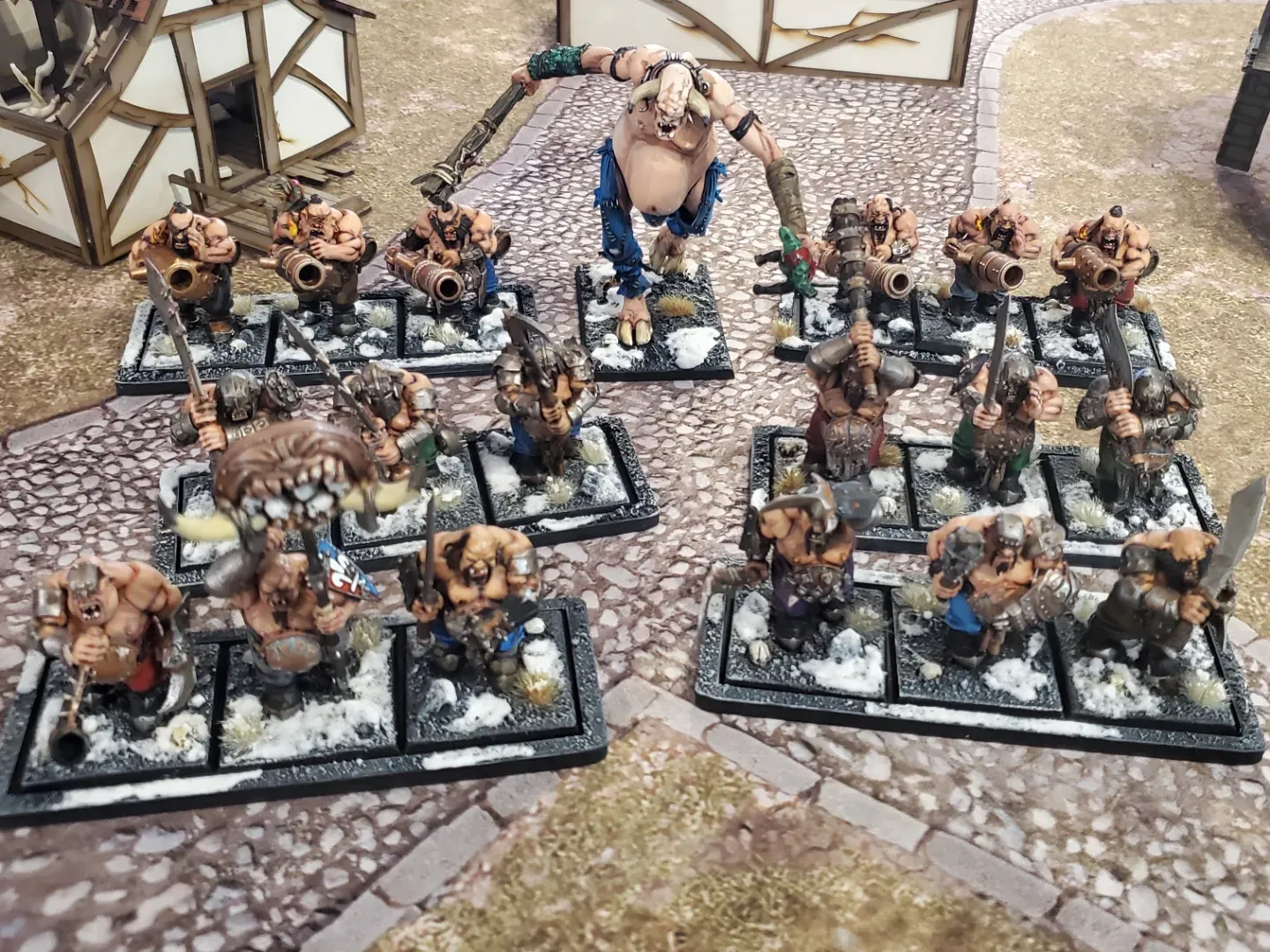
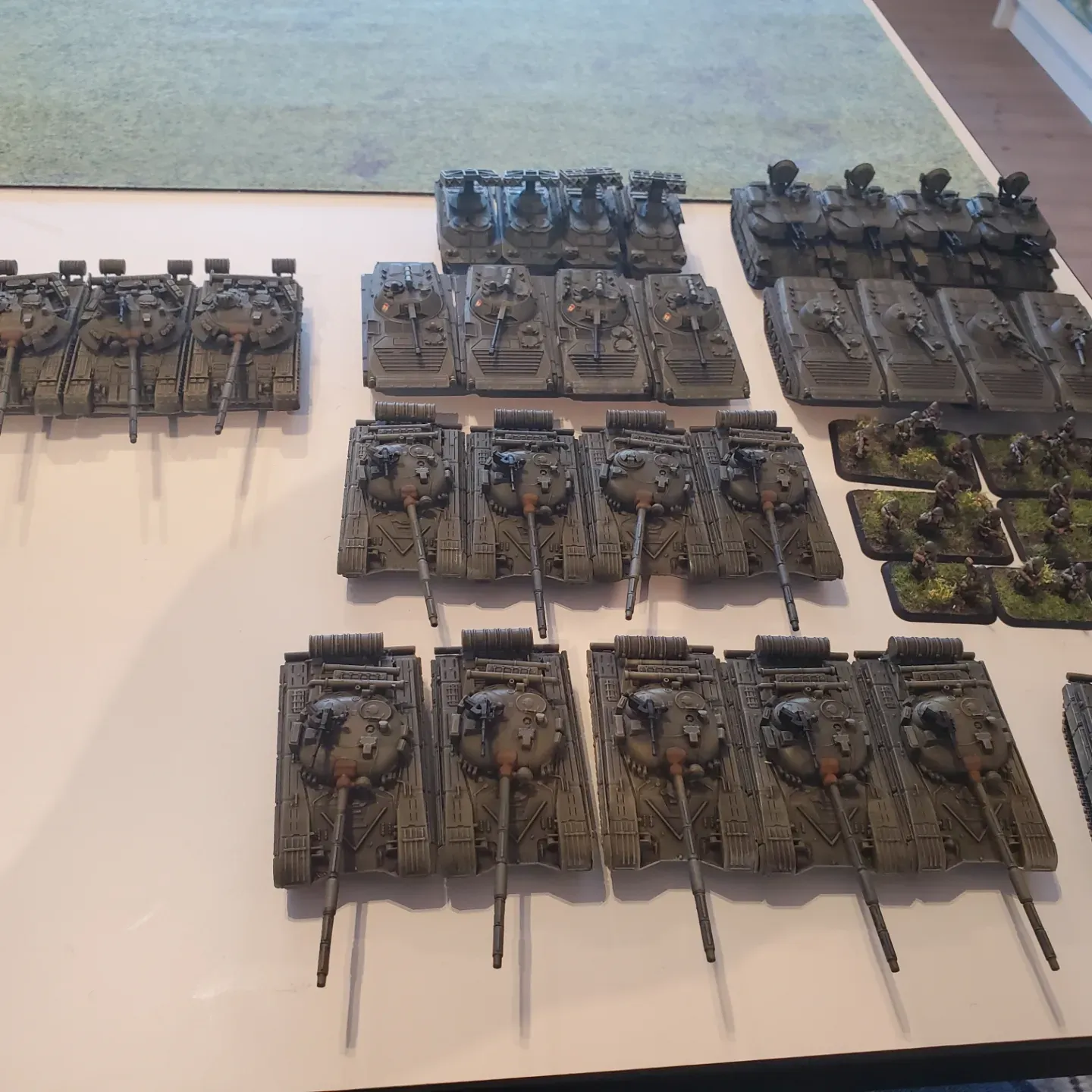
Having a fully painted force, whether for a skirmish game or a full-scale army, is a hell of an accomplishment. Unfortunately, judging by the tables at most game stores, many people seem to have given up on ever holding themselves to that standard.
I’m not going to sugarcoat it: painting an entire army takes an enormous amount of time and effort. But the mistake most people make is misidentifying the task in front of them. Outside of social media personalities doing 24-hour challenges, doing an army in one fell swoop just isn’t realistic.
Painting an army isn't one huge task; it's fifty small ones.
Part of your painting journey should be refining your process, understanding your limits and setting achievable goals so you don’t burn out trying to tackle the entire project at once.
For me, even with regularly shaped, fairly uniform models like Space Marines, I can’t stand painting more than three at a time. So when I take on a project like that, I break it into discrete chunks based on that limit instead of trying to assembly-line the entire force.
That way madness lies.
6) Be consistent
Occasionally, someone from the local community will ask how I’m able to maintain my level of output. I’ll let you in on my secret. The only way to paint more…
…is to paint more.
Unfortunately, it’s as simple as that.
To circle back to an earlier point: painting is a physical process. Without putting in the reps, improvement will always remain just out of reach. By all means, talk to other painters. Watch instructional videos. Read blogs. There’s value in all of it.
But I think you’ll find that your greatest discoveries and strongest inspirations won’t come from external sources. They’ll come from the milestones you reach by sitting down and doing the work.
Mine always do.